Sharjah Maritime Academy connects higher education with an industry in which technical judgement, safety and international coordination are inseparable. Its setting in Khorfakkan gives the institution a clear maritime context, while its programmes span seagoing and shore-based pathways. The central question for applicants is which part of the maritime system they want to understand and practise: machinery, navigation, logistics, management or another defined professional route.
A specialised institution in a maritime setting
The academy’s official resources place it in Khorfakkan and describe higher education and professional training for the maritime sector. Its purpose is easier to understand when the sector is seen as a connected system: ships, ports, cargo, regulation, engineering and commercial decisions depend on one another.
For students, that interconnectedness creates several distinct choices. A seagoing route may involve requirements very different from a degree oriented toward supply chains or business. The correct comparison starts with the intended work environment and the qualifications needed to enter it. An applicant should not choose a maritime programme only because of the attraction of travel or the visual appeal of ships and ports.
Engineering and maritime transport
The undergraduate catalogue identifies Marine Engineering Technology and Maritime Transport. The former is described in relation to preparation for a watchkeeping engineering competency pathway, while the latter is linked to a navigational watchkeeping route. These statements describe educational preparation; they should not be interpreted as automatic issue of a professional certificate at graduation.
Ask how academic study, simulator work, practical training and any required sea service fit together. Clarify the assessment and medical requirements, the competent certifying authority and any costs beyond tuition. A clear sequence from entry to degree completion and subsequent professional certification is more useful than a broad promise of an international career.
Logistics and maritime business
The academy also lists Maritime Logistics and Supply Chain Management and Maritime Business. These pathways examine a different part of the sector: the movement of goods, the coordination of operations and the commercial and organisational decisions surrounding maritime activity.
A prospective student should inspect the balance of quantitative work, management, industry knowledge and applied assessment. Ask how the course develops the ability to analyse a problem rather than memorise terminology. Compare final projects and practical components, and clarify which careers require additional credentials. The existence of a broad maritime economy does not mean every degree leads to the same type of work or the same professional status.
Professional training and the meaning of certification
Official application resources distinguish undergraduate study from STCW training and Certificate of Competency or licence-related routes. These categories serve different purposes and may address students at different stages of professional development. An attendance certificate, an academic degree and a competency certificate should never be treated as interchangeable.
Before selecting a short course or professional route, identify the authority and standard relevant to your intended role. Ask about prerequisites, assessment, validity and renewal. Experienced professionals should also verify whether their existing service or qualifications meet entry conditions. This prevents a training purchase from being mistaken for a complete professional progression pathway.
Simulation, practical learning and student support
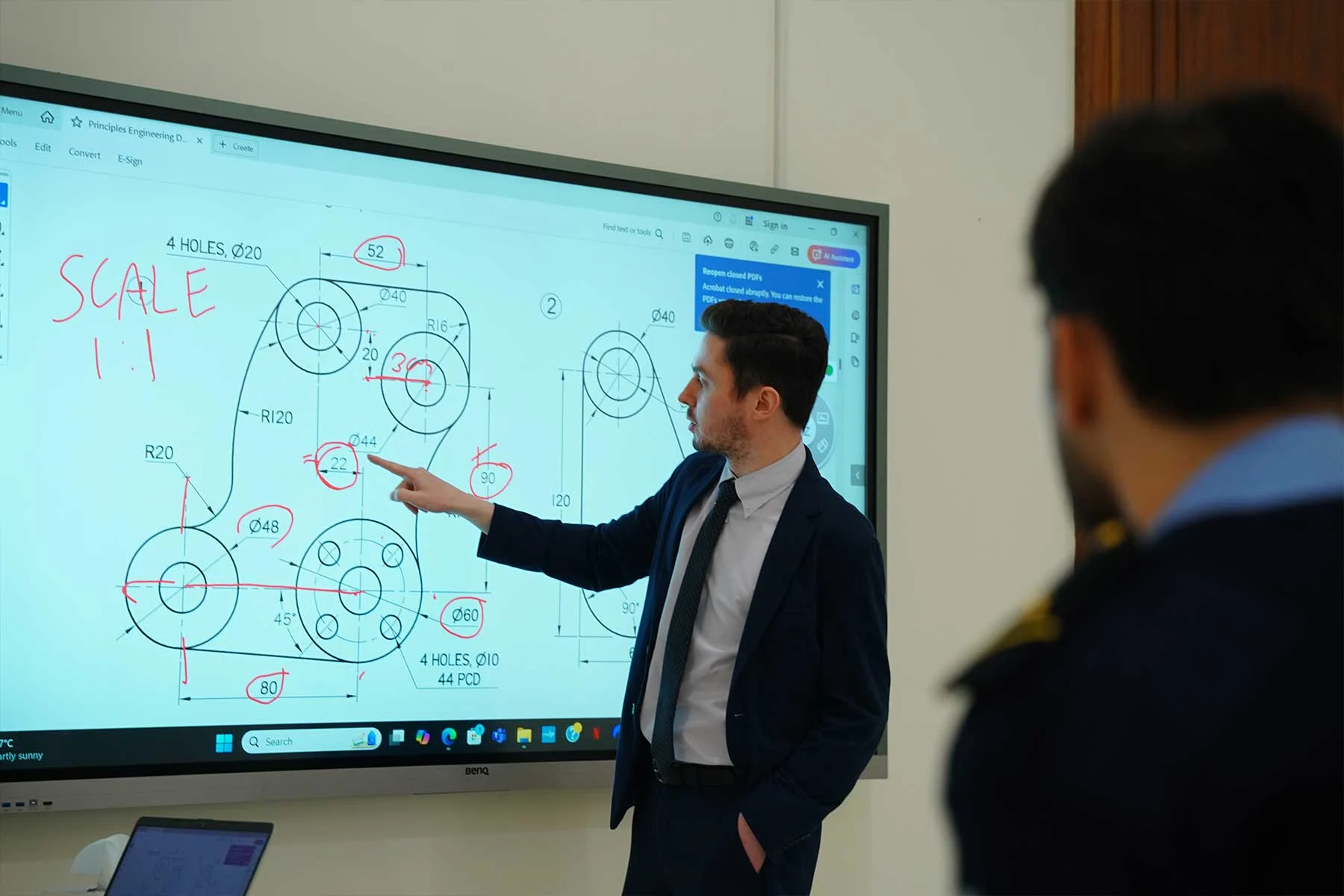
The academy describes simulators and workshops intended to support maritime learning. Their value lies in how they are integrated with instruction, feedback and assessed competence. Ask what a typical practical session involves, how mistakes are discussed and how students progress toward more complex tasks.
The admissions resource also describes support for international students, including guidance on enrolment and residence-related arrangements. Confirm the actual provision, eligibility and costs for your case. Students should ask about accommodation, daily transport, medical requirements and the arrangements for any off-campus or sea-based activity. A demanding professional route needs a workable everyday support structure.
Admissions and the full financial picture
The academy publishes requirements that vary with the applicant’s school background and programme. English evidence or placement testing, school documents, equivalency and medical fitness may all be relevant. Where a bridging route is available, ask about its duration, progression conditions and consequences if requirements are not completed.
Request a written cost breakdown for the whole intended route, including compulsory training, certification-related costs and any practical components not included in tuition. Confirm sponsorship or scholarship support independently. Finally, distinguish the academy’s admissions decision from the decisions of immigration, certification and professional authorities, each of which may have separate requirements.
Pathways worth exploring.
This is an orientation to the academic landscape, not an exhaustive catalogue or confirmation of open admissions. Use the official resources below to verify the exact award and current entry conditions.
| Field or pathway | What to investigate |
|---|---|
| Marine Engineering Technology | An undergraduate pathway associated with engineering watchkeeping preparation. Clarify the relationship between degree study, practical requirements and the separate competency certification process. |
| Maritime Transport | A navigation-oriented route. Ask about simulation, supervised practical development, required service and the steps toward the relevant professional certificate. |
| Maritime Logistics and Supply Chain Management | Study the coordination of goods and operations. Compare analytical methods, management content and practical assessment rather than assuming this is a seagoing officer route. |
| Maritime Business | The undergraduate catalogue identifies a business-focused maritime degree. Review the commercial and organisational content and ask how sector knowledge is translated into assessed work. |
| Technical diplomas and professional courses | The academy distinguishes diplomas, STCW training and competency or licence-related routes. Select according to the exact role and certifying requirements rather than treating all certificates as equivalent. |
Build your own decision record.
Programme and qualification
Record the exact award, level, teaching language, campus and intended intake. Keep a dated copy of the programme plan and entry conditions so that different institutions can be compared on the same basis. Ask about course sequencing, final assessment and practical or research requirements, including how additional preparation could affect the duration of study.
Cost and funding
Request current tuition and compulsory charges, then include accommodation, transport, materials and insurance where applicable. Separate confirmed figures from estimates and read deposit, instalment, refund and deferral terms. Do not deduct a potential scholarship from the budget until it is confirmed in writing, with coverage, continuation and exclusions understood.
Visit and unresolved questions
Prepare questions specific to the programme and record the answer, the responsible office and the date. Confirm practical arrangements, support, accessibility and supervision, together with later recognition where relevant. A useful visit goes beyond the appearance of the buildings: it helps explain how you will learn and manage an ordinary study week.
Questions that matter.
Does graduation automatically give a Certificate of Competency?+
Do not assume that. A degree can prepare for a professional route while certification has separate service, medical, examination or authority requirements. Ask for a complete written sequence covering the specific role you intend to pursue.
Are all maritime programmes seagoing routes?+
No. The catalogue includes logistics and business alongside navigation and engineering-related routes. Compare the intended work environment and qualification requirements for each rather than treating maritime study as one occupational pathway.
What should international students confirm?+
Confirm academic eligibility, English and document requirements, visa guidance, medical conditions, accommodation and the full cost. Guidance from the academy does not replace decisions by immigration or professional certification authorities.
Official resources for this portrait.
Institutional facts are grounded in the resources below. Interpretation and comparison guidance are independent editorial content. Programmes, fees and admission conditions may change after the review date.
- Academy and learning environment ↗
- Undergraduate programmes ↗
- Admission requirements ↗
- Application and professional training information ↗
An independent editorial portrait. Inclusion does not imply endorsement, partnership or an admission offer from the institution.