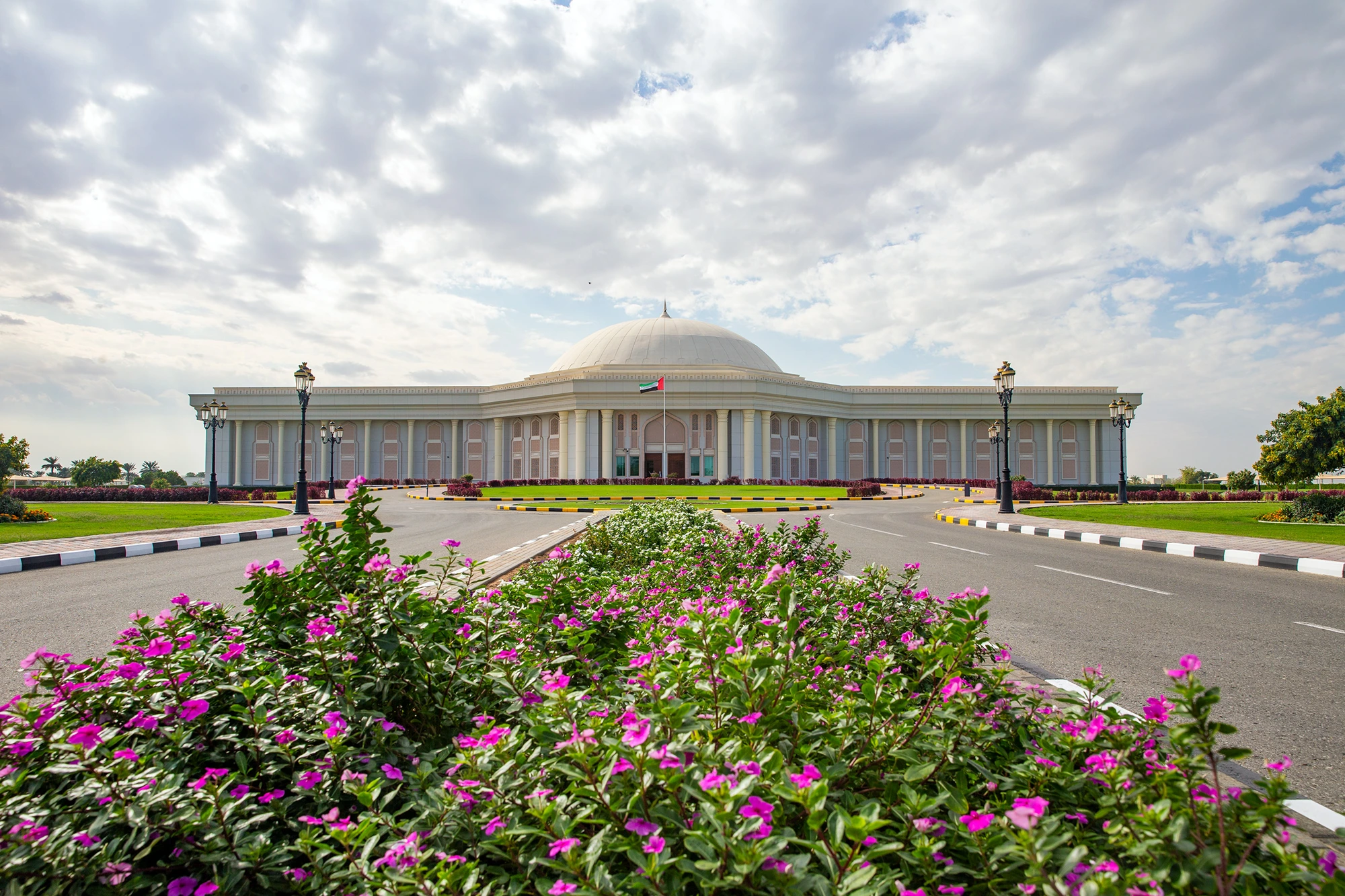
To understand Sharjah’s educational ambitions, it is useful to look beyond any single campus. The deeper story is about relationships: between a child’s first encounter with a book and a university researcher’s question; between the preservation of language and the development of new scientific knowledge; between institutions in the city and opportunities across the coast and central region. Schools, universities, libraries, museums and professional academies perform different tasks, but together they can widen the ways in which people enter a life of learning.
This essay examines that landscape through documented milestones and an independent editorial interpretation of their significance. It does not claim that every institution follows one identical model, or that an impressive building is sufficient evidence of educational quality. The more substantial story is the long work of building institutions, supporting people and connecting knowledge with public life.
Leadership and the long view
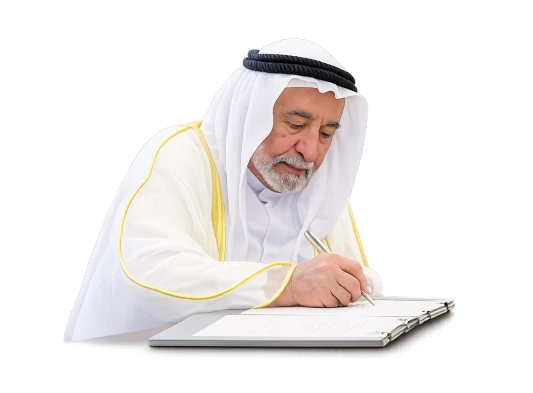
His Highness Sheikh Dr. Sultan bin Mohammed Al Qasimi, Member of the Supreme Council and Ruler of Sharjah, is central to the documented history of the emirate’s educational development. The University of Sharjah’s founder biography records his studies in agricultural engineering at Cairo University, a doctorate in history at the University of Exeter and a further doctorate in the political geography of the Gulf at Durham University. Those details give a specific scholarly dimension to the leadership story.
The biographies of leaders do not, by themselves, explain the quality of an education system. Their significance becomes more concrete when traced into institutions that persist: universities, academic programmes, public cultural activity and structures for supporting research and professional development. In Sharjah, the founding histories of several institutions provide that evidence of sustained involvement.
An independent reading of this record suggests an important distinction between an event and a commitment. An opening ceremony marks a moment; an institution requires continuing work in teaching, governance, resources and people. The long view is therefore best examined through the capacity that remains after the ceremony: places to study, expertise to consult, collections to use and opportunities for successive generations.
Section sources: [1]
University City: giving knowledge a place
The University City of Sharjah describes its establishment in 1998 and a role involving an integrated environment and services for its institutions, residents and visitors. This followed the foundation of the University of Sharjah and American University of Sharjah in 1997. The chronology is important: individual institutional histories and the development of a wider university setting are related, but they are not the same event.
The idea of a university city is larger than a collection of academic buildings. It raises practical questions about the surroundings in which study takes place: access, public space, transport, wellbeing and the proximity of other forms of expertise. A shared setting can make relationships more imaginable, while actual collaboration still depends on people, agreements and sustained work.
For a student, the value of the setting must eventually be tested in everyday life. Can the relevant resources be used? Is support accessible? Does the academic programme provide meaningful progression? These questions connect the scale of the educational vision with the experience of a particular learner. A strong institutional landscape should be understood both from the panoramic view and from the ordinary study week.
Books, language and a public culture of reading
The Sharjah International Book Fair dates its establishment to 1982. Its enduring place in the emirate’s public life is relevant to education because a reading culture extends beyond formal admission and graduation. Books connect children, families, scholars, authors, translators and publishers; they make learning visible as a social activity rather than a task confined to a timetable.
UNESCO’s designation of Sharjah as World Book Capital for 2019 recognised a programme organised around reading, inclusion, heritage, outreach, publishing and children. The designation was for a particular year, not a permanent ranking of all education systems. Its value in this story is the recognition of a public commitment to books and the opportunity to place different communities inside that commitment.
The educational question is what happens after a person encounters a book. Access matters, but so do language, time, encouragement and spaces for discussion. A fair can introduce a reader to an author; a library can sustain the relationship with reading; a classroom can help develop interpretation and judgement. The connections between these activities deserve as much attention as the scale of an individual event.
An educational geography across the emirate
A complete account of Sharjah cannot stop at the city centre or University City. The institutional landscape includes University of Khorfakkan, established in 2022; University of Kalba, established in 2023; and University of Al Dhaid, established in 2024. Their official accounts describe distinctive academic interests alongside broader programmes.
Khorfakkan connects its coastal setting with marine enquiry. Kalba has a visible focus on sport science within a wider university structure. Al Dhaid gives particular prominence to agriculture and veterinary medicine. These specialisms create different relationships between education and place: the coast as an environment to investigate, human performance as a field of study, and food and animal systems as subjects of scientific and practical importance.
This does not mean every degree at a regional university is defined by a single specialism. It means the landscape can be read as a set of complementary centres rather than copies of one institution. For families, the practical questions include access and travel; for researchers, they include local environments and expertise; for the emirate, they concern the distribution of opportunity and the kinds of capability being developed.
Research: from a subject to a question
A university teaches established knowledge, but it also creates conditions in which that knowledge can be questioned and extended. The University of Sharjah’s research structure spans medical and health sciences, sciences and engineering, and humanities and social sciences. American University of Sharjah identifies research activity in fields including materials, sustainability and innovation. Khorfakkan’s research resources give particular visibility to marine and environmental work.
These institutional descriptions are starting points rather than a single measure of performance. To understand a research environment, look for identifiable expertise, methods, outputs and the conditions under which people can work. A laboratory matters because of the questions investigated there; a partnership matters because of the exchange or work it supports.
The Sharjah Council for Higher Education and Scientific Research adds a further institutional layer to the landscape. Its official account describes a mandate and legal framework for its responsibilities. The broader editorial lesson is that a research culture involves more than an isolated project: it requires structures for coordination, support, evaluation and the responsible circulation of knowledge.
Supporting the people who teach
An education system depends on the judgement of the people inside it. Sharjah Education Academy, established in 2020, places educator development within the emirate’s institutional landscape. Its academic and professional-learning routes distinguish the preparation of teachers and educational leaders from the wider catalogue of university subjects.
The significance of that focus is best understood at classroom level. Planning, explanation, feedback, assessment and inclusion are repeated decisions, not simply techniques acquired once. Professional learning becomes meaningful when it helps an educator examine those decisions and improve them with appropriate evidence and reflection. A qualification can support that process, but its value should be judged through the work it enables.
Attention to teachers also connects the different stages of education. A child’s confidence in reading, a student’s readiness for university and an adult’s willingness to return to learning can be shaped by earlier educational experiences. Supporting educators is therefore part of the infrastructure of opportunity. This is a general educational interpretation, not a claim that a particular programme has produced a measured outcome that has not been documented.
Memory and lifelong learning
Al Qasimia School’s Museum of Education in Sharjah opened on 29 January 2025, according to the Sharjah Museums Authority. Its classrooms, documents and educational collections provide a way to encounter the history of learning through material evidence. The authority also records that the Ruler studied at the school during the 1951–1952 academic year, connecting a personal educational history with a public institution of memory.
Preserving an old school is not only an act of nostalgia. It allows visitors to ask how teaching, subjects, expectations and opportunities have changed. A museum can make the ordinary objects of education worthy of attention: a book, a desk, a written exercise or a photograph of a class. These objects help explain that today’s institutions have histories shaped by people and decisions.
Sharjah’s UNESCO learning-city profile records membership of the Global Network of Learning Cities since 2022 and describes an interest in lifelong learning and early-childhood education. This widens the frame beyond university enrolment. A city of learning must also consider those outside formal study: parents, working adults, older residents and people encountering new languages or technologies.
The next chapter: connecting the landscape
The strength of an educational landscape is not exhausted by the number of its institutions. It also depends on whether people can understand the routes between them: how a school qualification leads to further study, how language preparation supports participation, how a research interest finds expertise and how professional learning can continue after graduation.
This is where a carefully documented public guide can contribute. It can make institutional differences clearer, connect a reader with the original source and distinguish an ambition from a current programme or an open application. It can also bring history into view without turning history into an uncritical catalogue of praise. Respect for an institution includes describing it accurately.
Sharjah Education is an independent initiative by Gabriel Nicolaev – CyGuru. Its purpose is to help families, students, researchers and visitors navigate the emirate’s educational and intellectual life. The institutional profiles and this historical essay are editorial work, not evidence of an agreement or endorsement by the government or the institutions described. The contribution we seek is practical: a more legible landscape of knowledge, presented with care for language, sources and the decisions readers need to make.
Milestones in a continuing story.
Selected milestones, not a complete history. Each entry identifies the kind of event, keeping foundation, recognition and later institutional frameworks distinct.
A public place for books
Sharjah International Book Fair is established. Its official history places books and readers at the centre of the initiative.
Section sources: [5]
An integrated university setting
University City dates its establishment to 1998, bringing an integrated setting and services into the higher-education landscape.
Section sources: [2]
Al Qasimia’s legal foundation
The university identifies Decree No. 2 of 2013 as its founding instrument. Later accreditation and teaching milestones are separate events.
Section sources: [18]
World Book Capital
UNESCO’s World Book Capital programme is held in Sharjah in 2019, with a focus on reading, communities, heritage, children and publishing.
Section sources: [6]
Khorfakkan’s university
University of Khorfakkan is established, with a coastal identity and academic interests extending beyond marine sciences.
Section sources: [7]
A learning-city connection
UNESCO’s learning-city profile records Sharjah’s membership of the Global Network of Learning Cities from 2022.
Section sources: [17]
Al Dhaid’s specialised contribution
University of Al Dhaid is established, with a particular emphasis on agriculture and veterinary medicine alongside wider colleges.
Section sources: [9]
The history of education becomes a museum
Al Qasimia School Museum opens on 29 January 2025, creating a public setting for exploring the emirate’s educational memory.
Section sources: [16]
A current university framework for the arts
University of the Arts Sharjah publishes its 2026 university licence. This is a current institutional framework, not the beginning of all arts education in Sharjah.
Section sources: [20]
Primary evidence. Independent interpretation.
Dates and institutional facts are grounded in the official and UNESCO resources below. The interpretation of relationships between education, culture and development is the author’s editorial analysis. No invented quotations, comparative rankings or unsupported impact figures are used.
- The Ruler’s academic biography ↗
- University City: history and purpose ↗
- University of Sharjah: institutional history ↗
- American University of Sharjah: history ↗
- Sharjah International Book Fair: foundation ↗
- UNESCO: Sharjah World Book Capital 2019 ↗
- University of Khorfakkan: overview ↗
- University of Kalba: establishment ↗
- University of Al Dhaid: establishment and purpose ↗
- University of Sharjah: research ↗
- American University of Sharjah: research ↗
- University of Khorfakkan: research portal ↗
- Sharjah Council for Higher Education and Scientific Research ↗
- Sharjah Education Academy: CAA record ↗
- Official account of the academy’s founding decree ↗
- Al Qasimia School Museum: education history ↗
- UNESCO Global Network of Learning Cities: Sharjah ↗
- Al Qasimia University: legal foundation ↗
- Global Studies University: institutional account ↗
- University of the Arts Sharjah: current licence ↗
Sources reviewed 31 October 2026. This independent essay is not a government statement or evidence of institutional partnership.